0x03 Visit Doon
The valley the tagline is about.
Dehradun sits at 640 m / 2,100 ft above sea level, in the valley between the Himalayan foothills and the Shivaliks. Security BSides Dehradun 0x03 is two days here, . This page is the practical half: how to get here, and what to do with a spare morning.
- Nearest airport
- Jolly Grant, DED roughly 25 km from the city. Domestic flights only.
- Railhead
- Dehradun, DDN central, a terminus, so you cannot sleep through the stop.
- Getting to the venue
- Energy Acres, Bidholi University of Petroleum and Energy Studies, Bidholi campus, Dehradun. The door to walk through goes out with the programme.
- Early April
- Warm days, cool evenings Spring, and before the monsoon. Something with sleeves for the evening.

01 Getting here
Three ways in, and the train is the one people forget.
Distances below are approximate and road times in the valley depend on the day. Check a live timetable before you book anything, nothing here is a schedule.
-
By air, into Jolly Grant
Jolly Grant is roughly 25 km from the city, and mostly served from the larger metros. Prepaid taxis outside, and allow about an hour into town, more if you land in the evening. No reason to arrive three hours early on the way home.
Check which way you are going. The airport is south east of the city and the campus north west, so a run straight to Bidholi crosses the whole valley. The map in section 02 shows it.
-
By train, which ends where you want to be
Both daytime and overnight services run from Delhi, and the fast daytime ones are competitive with flying once you count the airport at each end. Book early: this is a hill-station route in the season people go up it.
-
By road, from Delhi or from Haridwar
Delhi is roughly 250 km away, usually five to seven hours depending on where and when you leave. Overnight coaches run from the Delhi terminals into the Dehradun ISBT, a few kilometres out of the centre. From Haridwar or Rishikesh it is a short hop, well under two hours in normal traffic.
-
The last leg, to the campus
Gate published with the programme
The campus is Energy Acres, P.O. Bidholi Via Prem Nagar, Dehradun 248007, Uttarakhand, India, at 30.4176° N 77.9683° E. Search those two numbers, not the university's name: UPES has a second Dehradun campus and a name offers you either. Open the campus in a map.Which gate to stand at, the nearest landmark and anything we arrange to help people get there go out with the programme, to everyone holding a ticket.
Getting around once you are here
- Autos and shared vikrams
- The normal way to move short distances
- Ride-hailing
- The usual apps work With the usual caveats about surge and about being twenty minutes away.
- Electric city buses
- Fixed routes, not everywhere Worth a look if one is going your way, no use at all if it is not.
- On foot
- The centre is walkable Distances inside town are small, and most of what is worth seeing is within an hour's drive of it.
When to arrive
The conference is 3–4 April 2027. Arriving the evening before is the difference between a first session and a first session you were awake for. If you are travelling from outside the region, the day after is the cheaper one to keep free.
Nothing is arranged by us yet
To be confirmed
There is no conference shuttle, no block-booked hotel and no travel desk at this
stage. If any of that is arranged, it is announced with the programme rather than
hinted at here.

02 The valley
What is within an hour of the conference.
Dehradun is the capital of Uttarakhand and sits in the Doon valley, with the Yamuna at one end, the Ganges at the other and a ridge above it. None of the following is organised by the conference; it is simply what is here.

- Himalayan foothills
- Mussoorie
- Yamuna
- Ganges
- UPES, Bidholi
- Dehradun
- Rishikesh
- Jolly Grant, DED
- Rajaji National Park
- Shivalik hills
- to Delhi, 250 km
-
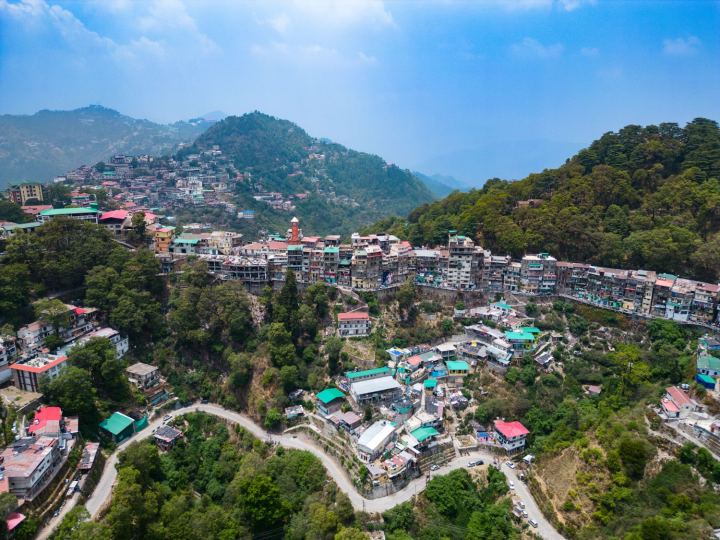
Up the ridge
Mussoorie
Roughly 35 km north and about 1,300 m higher, an hour and a half of switchbacks. This is the busy one: a mall road you walk end to end, the whole valley laid out below you, and a great many other people doing the same thing. A weekday is a different town from a Saturday.
-
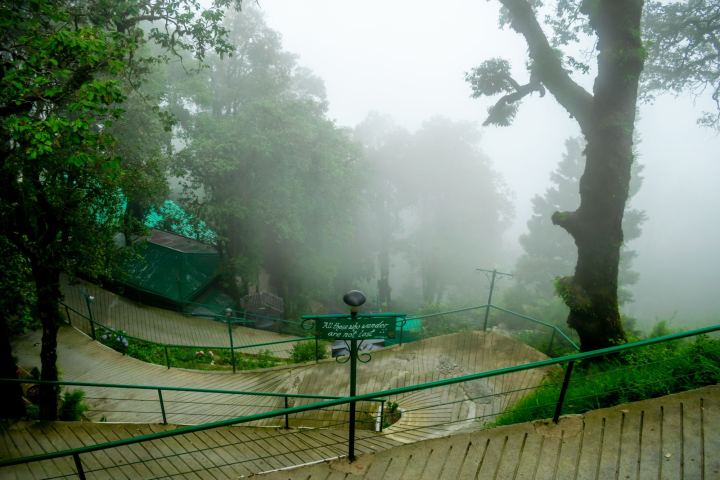
Higher, and quieter
Landour
The cantonment immediately above Mussoorie, and the quiet half of the same trip: deodar, colonial-era churches and a loop of road you walk rather than drive. Lal Tibba at the top of it is the viewpoint people make the climb for, and on a clear morning there is snow on the skyline from it.
-
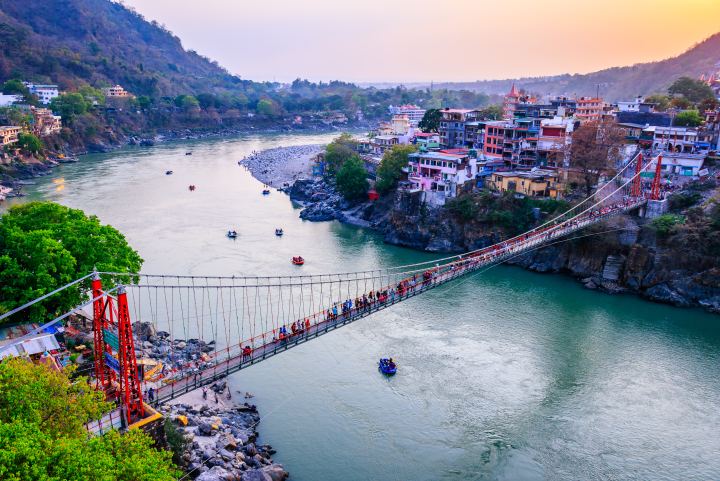
Down to the river
Rishikesh
Around 45 km away, where the Ganges comes out of the hills. Footbridges across the river, ashrams on both banks, rafting through the spring season and an evening on the ghats. It is the one place on this list a lot of visitors have already heard of before they arrive.
-
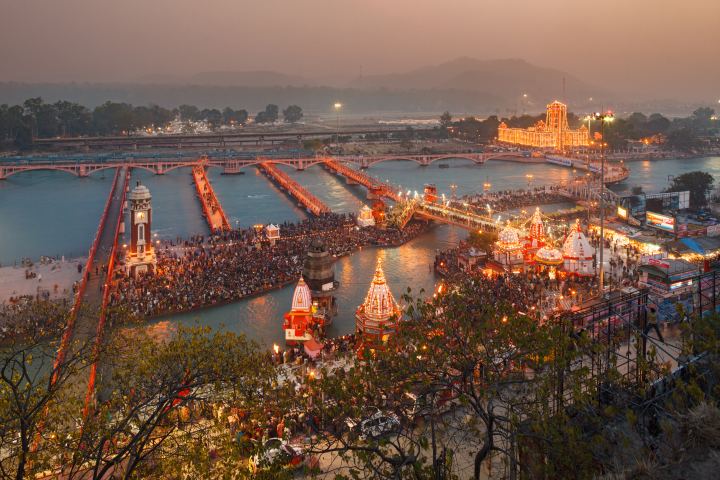
Where the river reaches the plain
Haridwar
Another 25 km on from Rishikesh, and the river is properly on the plain by the time it gets there. The aarti at Har Ki Pauri after sunset is why most people make the trip, and it is a crowd rather than a viewpoint. Check the festival calendar before you plan an evening around it.
-
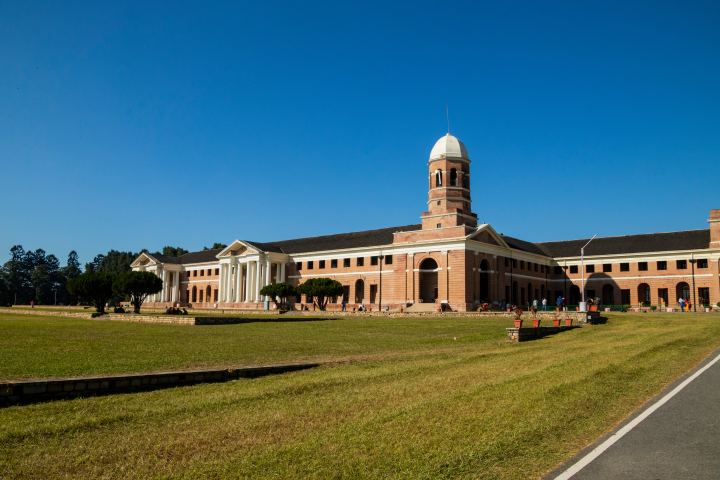
In the city
The Forest Research Institute
A national institution in a colonial-era brick building, on roughly 450 hectares you can walk through, with museums better than they need to be. The most photographed building in Dehradun, ten minutes from the centre.
-
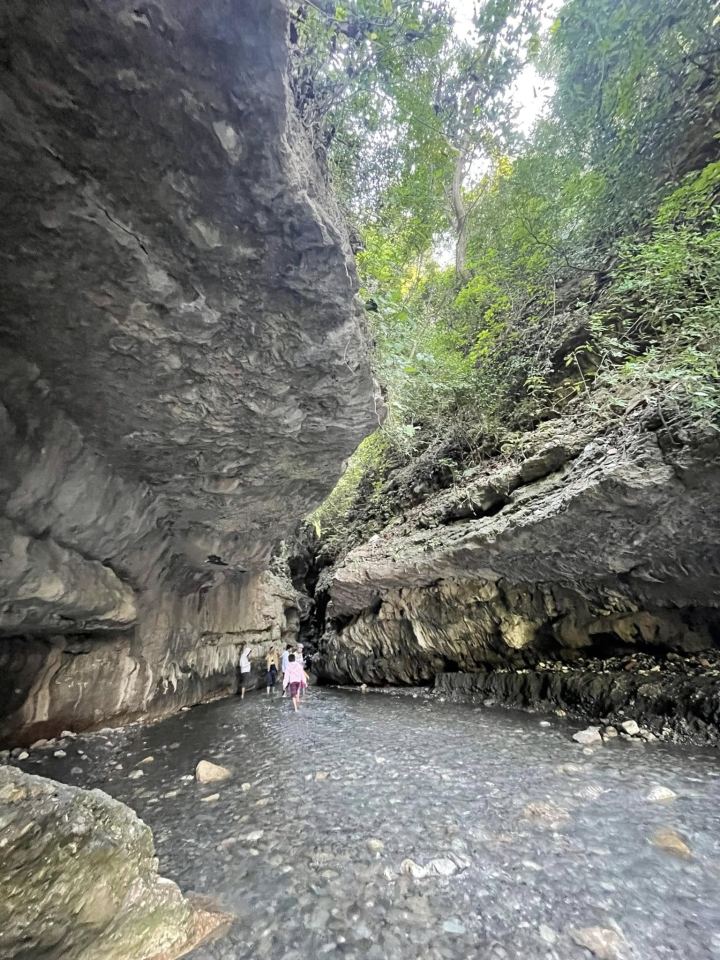
Ankle to knee deep
Robber's Cave
A stream runs out of a gorge 8 km from the centre, drops underground partway along and comes up again further on. Locally it is Guchhu Pani, and there is no dry path through: you wade it, in cold water that reaches the knee in places, so bring shoes you do not mind soaking. Busiest at the weekend.
-
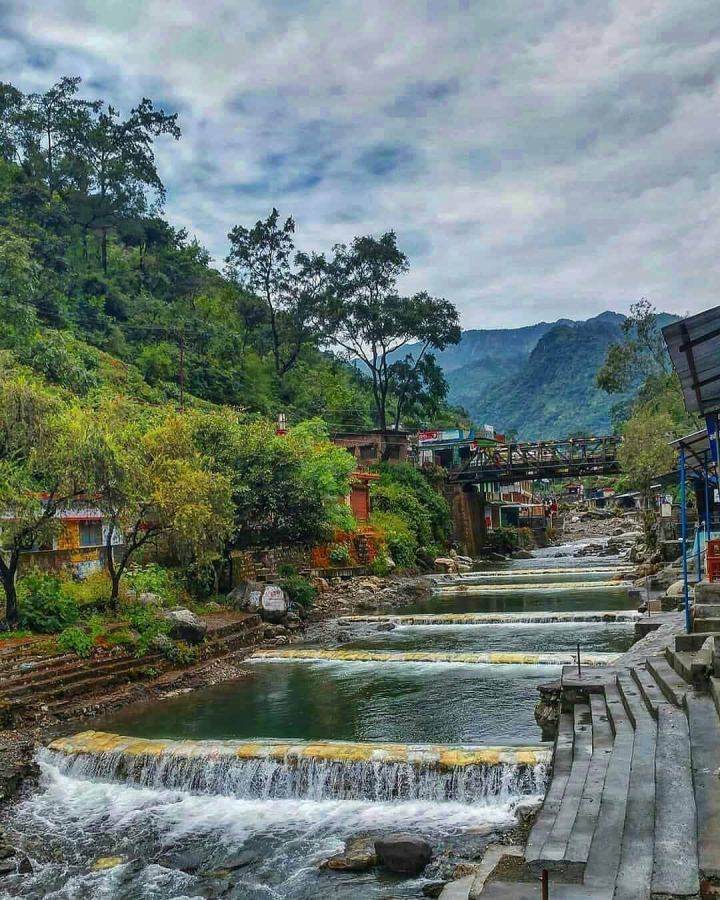
Rebuilt, and reopened
Sahastradhara
Sulphur water running over stepped limestone terraces on the Baldi river, and a name that means a thousand springs. A flash flood destroyed the market and much of the approach on the night of 15 September 2025; both were rebuilt and the site reopened to visitors in the spring of 2026. Accounts of how far out it is vary between 11 and 18 km.
-
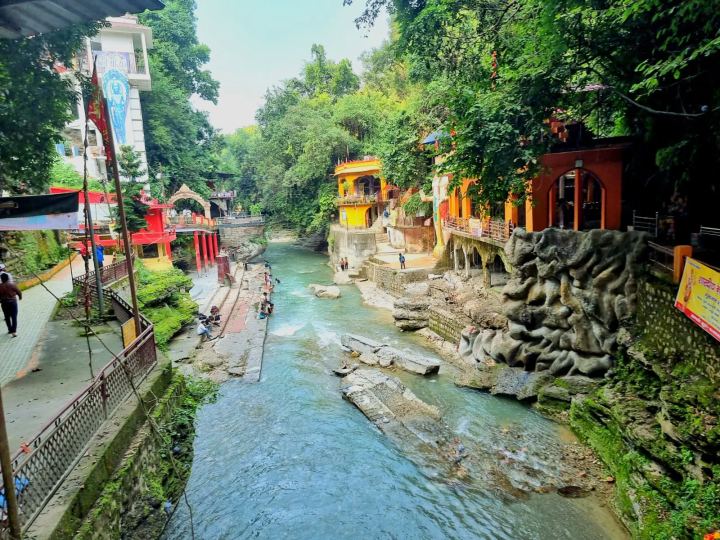
Down at the river
Tapkeshwar
A Shiva temple built over a natural cave on a riverbank six kilometres from the centre, with water dripping onto the lingam inside, which is where the name comes from. The cave is called Drona, after the Mahabharata teacher Dronacharya, who local belief holds lived in it. Open from early morning to evening.
-
Wild edges
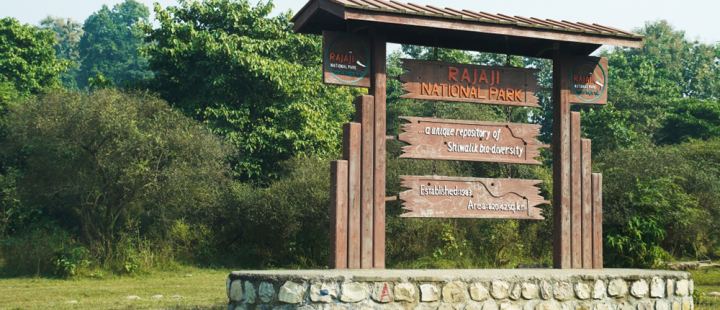
Rajaji National Park
The park runs along the valley's southern and eastern edges, elephant country with gates within an hour of the city. Open in early April, closed for the monsoon later in the season. Check the gate before you set out: entry is regulated and not every gate takes walk-ups.
-
Half an hour, on foot
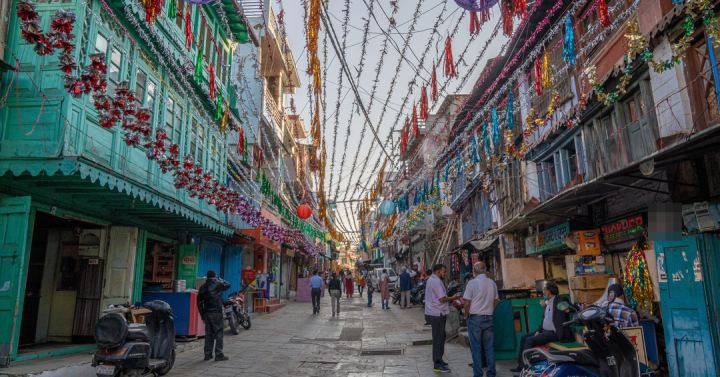
Paltan Bazaar
The oldest part of the city that is still doing its original job. Street food, fabric, hardware and a great deal of noise, the shortest route to feeling like you have actually been somewhere.
-
Better after dark
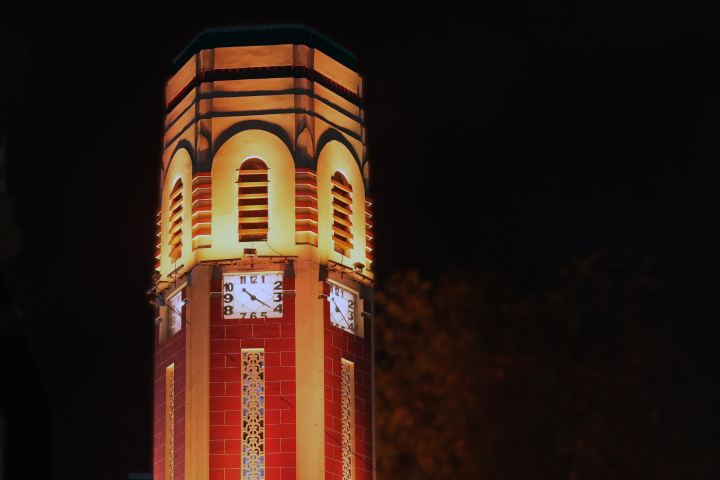
The clock tower
Paltan Bazaar runs off it, so you will pass it whether you meant to or not. It is floodlit at night, which is the version worth stopping for rather than the one you walk past at noon.


Scroll sideways, or use the arrows.
01 / 11
03 A spare day
Three shapes for the day either side of the conference.
Pick one, not all three. The valley punishes optimism about driving times.
-
Half a day, no car
The Forest Research Institute in the morning, the clock tower and Paltan Bazaar for lunch, and an hour of doing nothing on a bench somewhere. It fits before an afternoon flight and needs no planning at all.
-
A full day up the ridge
Leave early for Mussoorie, walk in Landour rather than on the mall, and come down before dark: the road is slower at night and the last stretch is unlit. Allow three to four hours of driving, and a jacket.
-
A full day at the river
Rishikesh in the morning, Haridwar for the evening aarti, back late. Roughly two and a half hours of driving, more on a weekend or a festival day. Check the calendar before you commit: a festival changes the crowd by an order of magnitude.
If you only have the evening
Do the bazaar. It is ten minutes from most of the city, it is open late, and it is the one thing on this page that costs nothing and needs no vehicle.
Bringing someone who is not attending
Everything in section 02 works without a conference ticket, and none of it needs one. A ticket is only for the conference itself, the valley is not gated.
The three ticket types


04 Eating
Six things to eat, and why the momos are good.
Dehradun has a large Tibetan settlement at Clement Town, roughly seven kilometres south of the clock tower, and that is why the momos here are not a novelty. No restaurant, cafe or bakery is named below, for the same reason no hotel is named further down: an endorsement is not ours to give, and the dishes outlast the places that serve them.
-

Street food
Bun tikki
The city's own. A potato tikki in a bun with chutney and raw onion, closer to chaat than to anything you would call a burger, eaten standing up. The one thing on this list done this way here and nowhere else.
-

From Clement Town
Momos
Steamed or fried, with a chutney hotter than it looks. This is Tibetan food cooked by the people whose food it is, which is the entire difference.
Mindrolling Monastery is at the middle of the settlement, re-established in this valley after its community left Tibet, its Great Stupa inaugurated in 2002.
-

When the evening turns
Thukpa
A noodle soup out of the same kitchens, and the thing to order once the light has gone and the temperature has followed it down. Noodles, broth, whatever green is about, and too hot to eat for the first five minutes.
-

From the hills
Aloo ke gutke
Boiled potato cut into cubes and finished in mustard oil with dried red chilli and jakhiya, a seed that grows in these hills and is barely used outside them. Garhwal and Kumaon both claim it and both are right. It arrives as a side dish and does not stay one.
-

The sweet
Bal mithai
Roasted khoya under a coat of white sugar balls. It is from Almora, over in Kumaon, and not from this valley at all, which has never stopped a shop in Dehradun from selling it.
-
Cold, and only in spring
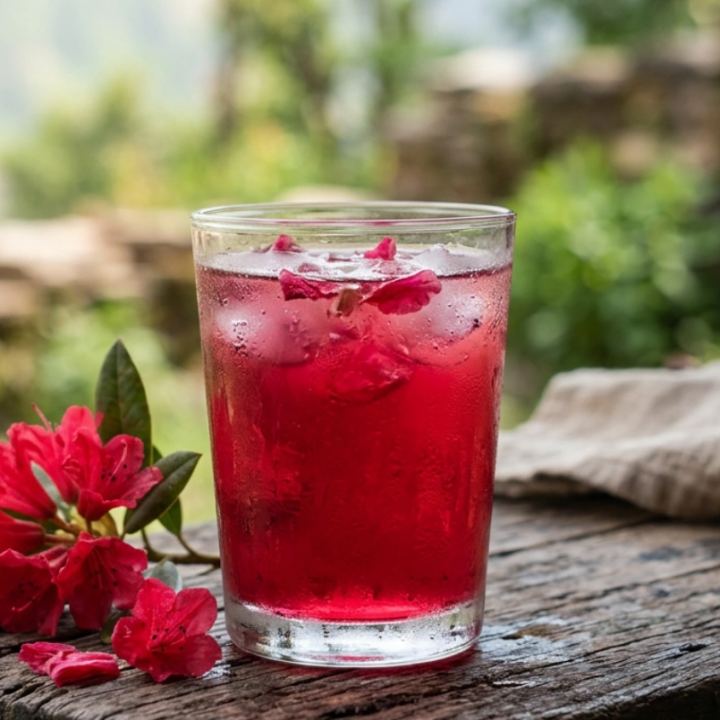
Buransh
The red rhododendron that flowers along these ridges between February and April, pressed into a squash and sold in bottles all over the hills. Sweet, faintly tart, the colour of the flower it came out of, and served cold, which on an afternoon in early April is the entire point.


-
Take something home
The hill pulses, sold by weight
Gahat, which is horsegram and the one to start with, black bhatt soybean, and rajma off the slopes higher up this district. Paltan Bazaar sells all three by weight, along the same stretch as the woollens and the hardware. Of everything on this page these are the ones that turn into cooking at home rather than into a photograph.
-
If you want the hill version
Garhwali food, which you have to ask for
The food of the hills is not the food of the plains. Kafuli, a green gravy thickened with rice flour, the gahat from the card beside this one cooked down thick, and thalis built on mandua and jhangora rather than wheat. The default in a city restaurant is north Indian, which is why you ask.
05 Practical notes
Eight dull things, worth knowing anyway.
- Weather in early April
- Warm afternoons, cool evenings Spring, and well before the monsoon. High twenties or low thirties in the afternoon, a layer after dark, and around ten degrees cooler up the ridge.
- Altitude
- 640 m / 2,100 ft above sea level Enough to give the evenings their character, nowhere near enough to need acclimatising to. Mussoorie is the genuine jump.
- Staying
- Nothing block-booked The station and the clock tower are central, the campus is not, so decide which of the two mornings you would rather have. We do not recommend individual places.
- Paying for things
- UPI, cards, and some cash Carry a little cash anyway: autos, a temple donation box and the smallest stalls still prefer it.
- Water
- Bottled or filtered A refillable bottle is the sane approach, and April afternoons will empty it faster than you expect.
- Language
- Hindi and English Both are understood everywhere you are likely to be. Garhwali is the language of the hills.
- Connectivity
- Good in the city Mobile data is fine in town and patchy the moment you climb. Do not plan a call from a switchback.
- Monkeys
- Not a joke Around temples, the ridge and anywhere with a view, food in your hand is an invitation. Bags closed, snacks away.
Coming from outside India
Ask early
Visa requirements are between you and the Indian mission where you live, and we
cannot advise on them. We can confirm the conference in writing if an application
needs it. Write to
support@bsidesdehradun.com
early rather than the week before.
Accessibility
Being checked
We are not going to describe a venue's step-free routes before we have walked
them. Tell us what you need at
support@bsidesdehradun.com
and you will get a straight answer, including a no.
What we can actually help with
Not hotels. Which train is worth taking, whether a plan fits between two sessions, and putting you in touch with other people travelling from your city. The answer comes from somebody who lives here.
Ask us06 Questions
What people ask before they book.
Which UPES campus is the conference at?
Energy Acres, the Bidholi campus, at 30.4176° N 77.9683° E. Search those two numbers rather than the university's name: UPES has a second campus in Dehradun and a name will offer you either one.
Which gate you should be standing at is a different question, and we are not going to guess it. The gate, the nearest landmark and anything we arrange to help people get there go out with the programme and to everyone holding a ticket.
What is the nearest airport?
Jolly Grant, DED, roughly 25 km from the city, domestic flights only and mostly from the larger metros. Allow around an hour from the terminal into town by road, more if you land in the evening.
Note which way you are going as well. The airport is south east of the city and the campus is north west of it, so a run straight to Bidholi crosses the whole valley instead of half of it.
Is the train worth taking?
Often, and it is the option people forget. Dehradun, DDN is central and it is a terminus, so there is no stop to sleep through. There are daytime and overnight services from Delhi, and the fast daytime ones are competitive with flying once you count the airport at each end. Book early for early April, this is a hill-station route in the season people go up it.
When should I arrive?
The conference is , and arriving the evening before is the difference between a first session and a first session you were awake for. If you are travelling from outside the region, the day after is the cheaper one to keep free.
Is accommodation arranged?
No. Nothing is block-booked and we do not recommend individual places. Near the railway station and the clock tower is central and the campus is not, so decide which of the two mornings you would rather have.
What is the weather like in early April?
Warm afternoons and cool evenings. Spring, and well before the monsoon: expect the high twenties or low thirties in the afternoon and something that wants a layer after dark. Up the ridge it is around ten degrees cooler.
Can I bring someone who is not attending?
Yes. Everything in the valley works without a conference ticket and none of it needs one. A ticket is only for the conference itself. The valley is not gated.
Can you help with a visa?
Visa requirements are between you and the Indian mission where you live, and we cannot advise on them. What we can do is confirm the conference in writing if an application needs it. Write to support@bsidesdehradun.com with plenty of time rather than the week before.
Is the venue accessible?
Being checked. We are not going to describe a venue's step-free routes before we have walked them. Tell us what you need at support@bsidesdehradun.com and you will get a straight answer, including a no.
Come up
Two days of conference, and a valley that rewards the third.
3–4 April 2027 at UPES Bidholi Campus, Dehradun. Tickets are not on sale yet, the prices are set and the registration section says what happens next.